Mazda · FC3S
Mazda RX-7 FC
The second-generation RX-7 refined Mazda's rotary sports-car formula with a genuinely sophisticated chassis, including available four-wheel steering, wrapped around the distinctive high-revving 13B-T twin-rotor engine.
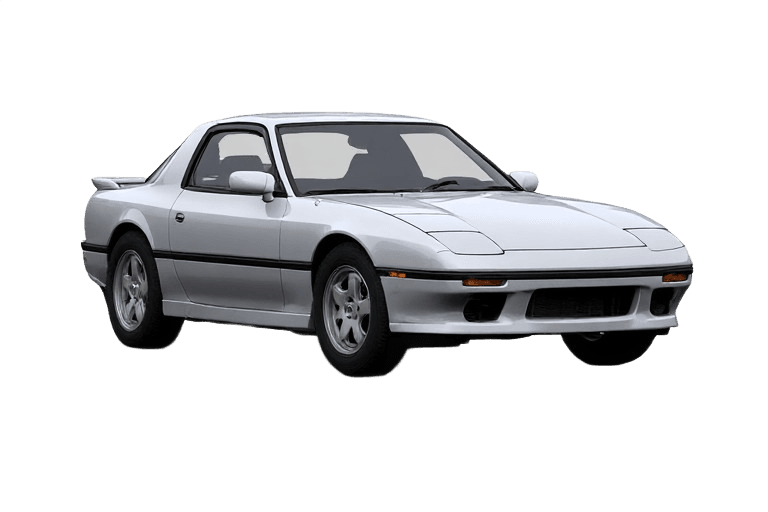
Spec Sheet
- Generation / Chassis Code
- FC3S
- Years Produced
- 1985–1992
- Manufacturer
- Mazda
- Country
- Japan
- Body Style
- 2-door coupe
- Engine
- 1.3L twin-rotor turbo (13B-T)
- Horsepower
- 182–205 hp
- Torque
- 181–196 lb-ft
- Transmission
- 5-speed manual
- Drivetrain
- RWD
- Weight
- ~2,800 lbs
- 0–60 mph
- ~6.7 seconds
History
Mazda positioned the FC as a more grown-up, GT-oriented successor to the original RX-7, competing directly with the Porsche 944 in period reviews, and it earned praise for genuinely sorted, communicative handling.
Why It Became Famous
It proved Mazda's rotary engine philosophy could deliver genuinely competitive sports-car dynamics against European rivals, all wrapped in a distinctive engine note found in no other production engine format.
Strengths
- Rotary 13B-T engine revs smoothly and quickly with a genuinely unique character
- Well-sorted, communicative RWD chassis praised against contemporaries like the Porsche 944
- Available four-wheel steering on some trims was advanced for its era
- Lighter and more agile than many contemporary sports coupes
Weaknesses
- Rotary engines require more frequent maintenance and are less tolerant of neglect than piston engines
- Oil consumption and apex seal wear are inherent rotary-engine characteristics
- Smaller, more specialized parts and service network than piston-engine rivals
- Fuel economy is notably worse than a comparable piston engine
Common Problems
- Apex seal wear leading to compression loss if not properly maintained
- Flooding issues if the rotary isn't started and driven correctly
- Cooling system failures leading to overheating and engine damage
- Rust in rear arches and floor pans on humid-climate examples
Modification Potential
Good within the dedicated rotary tuning community — turbo upgrades, port and apex seal work, and even piston-engine swaps (V8 conversions) are all documented paths, though rotary-specific expertise is essential.
Buying Guide
Get a compression test to check apex seal health, verify the rotary has been started and driven correctly (not left idle for long periods), and seek a rotary specialist for pre-purchase inspection.
Enthusiast Popularity Today
A respected rotary icon among Mazda purists, often overshadowed by the more famous FD generation but praised by those who know the platform for its sorted chassis.
Fun Facts
- Some FC trims featured Mazda's Dynamic Tracking Suspension System (DTSS), an early four-wheel-steering setup
- Automotive journalists of the era frequently compared it directly to the Porsche 944 for chassis sophistication
- The rotary engine's smooth, high-revving character comes from having far fewer reciprocating parts than a piston engine
More from Mazda
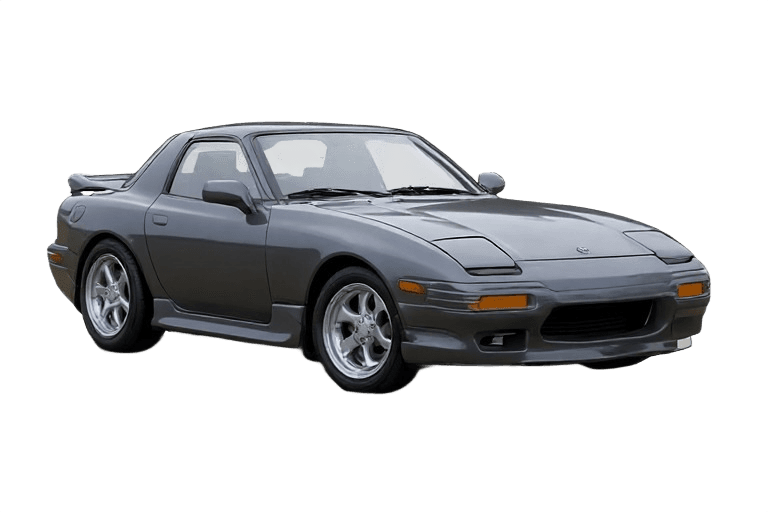 FD3S
FD3SMazda RX-7 FD
1992–2002 · 255–280 hp · RWD
Widely considered the pinnacle of Mazda's rotary sports-car era, the FD RX-7 pairs stunning, timeless curvaceous styling with a genuinely advanced sequential twin-turbo rotary engine and near-perfect 50/50 weight distribution.
 NA
NAMazda MX-5 NA
1989–1997 · 116–133 hp · RWD
The original MX-5 (Miata) single-handedly revived the affordable, lightweight British-style roadster formula that had all but died out by the late 1980s, proving that genuine driving joy comes from balance and simplicity rather than raw power.
 L10A / 110S
Mazda Cosmo
1967–1972 (original series) · 110 hp · RWD
The car that started it all: the original Cosmo was Mazda's first production rotary-engine car and one of the first rotary vehicles sold anywhere, proving the company's commitment to Felix Wankel's then-radical engine design decades before the RX-7 made rotaries famous worldwide.