Mitsubishi · CP9A
Mitsubishi Lancer Evolution V
Wider, more aggressive, and genuinely track-focused, the Evo V introduced a wider track and Mitsubishi's Active Yaw Control (AYC) rear differential, a genuine torque-vectoring system that dramatically sharpened the car's cornering ability.
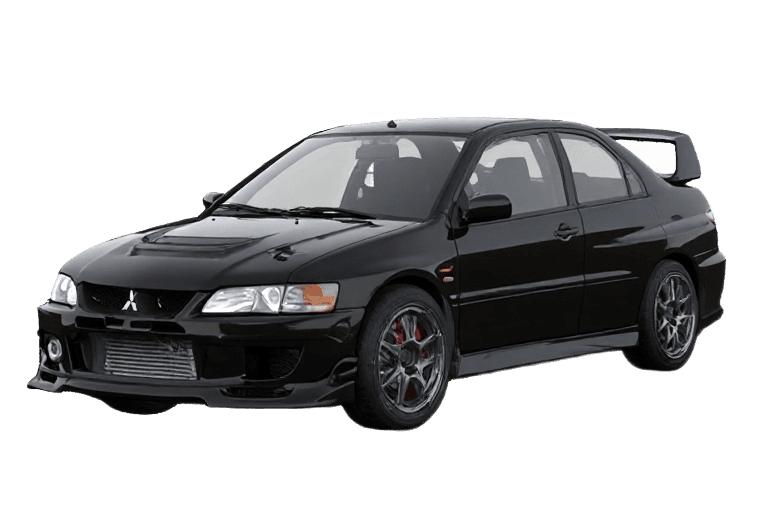
Spec Sheet
- Generation / Chassis Code
- CP9A
- Years Produced
- 1998
- Manufacturer
- Mitsubishi
- Country
- Japan
- Body Style
- 4-door sedan
- Engine
- 2.0L turbo inline-4 (4G63T)
- Horsepower
- 276 hp (JDM rating)
- Torque
- 275 lb-ft
- Transmission
- 5-speed manual
- Drivetrain
- AWD
- Weight
- ~2,900 lbs
- 0–60 mph
- ~4.6 seconds
History
Built during the height of Mitsubishi's WRC rivalry with Subaru, the Evo V's wider body and AYC differential reflected genuine racing-derived engineering aimed squarely at maximizing rally and road-going cornering performance.
Why It Became Famous
Its Active Yaw Control system was a genuine engineering leap for the era, giving the Evo a level of corner-exit traction and rotation that rivals struggled to match, cementing the Evo's reputation as an AWD handling benchmark.
Strengths
- Active Yaw Control rear differential gives genuinely exceptional cornering and rotation
- Wider track and stiffer chassis improve high-speed stability
- Strong, well-proven 4G63T engine with huge tuning potential
- Considered one of the best-handling Evo generations by many enthusiasts
Weaknesses
- AYC system adds mechanical complexity and repair cost versus a simpler differential
- Never sold outside Japan, so import documentation and sourcing require extra care
- Same aging 4G63T turbo and vacuum system concerns as other Evo generations
- Values have risen as AYC-equipped Evos gained collector recognition
Common Problems
- AYC pump and differential wear if fluid maintenance is neglected
- 4G63T turbo and head gasket wear, especially on tuned examples
- Rust in typical late-90s Japanese sedan problem areas
- Aging wiring affecting AYC and turbo control systems
Modification Potential
Excellent — shares the proven 4G63T tuning path, and the AYC differential remains a desirable, functional feature even in heavily modified track builds.
Buying Guide
Verify AYC system function during a test drive, check 4G63T turbo and head gasket condition, and confirm genuine import documentation since it's JDM-only.
Enthusiast Popularity Today
Highly regarded among Evo enthusiasts specifically for its AYC-enhanced handling, considered by many as a sweet spot in the lineage's evolution.
Fun Facts
- The Active Yaw Control system used hydraulics to actively transfer torque side-to-side at the rear axle, a genuine precursor to modern torque-vectoring differentials
- Its wider bodywork gave it a notably more aggressive stance than the Evo III and IV that preceded it
- Tommi Mäkinen's WRC-winning Evos of this era used closely related mechanical concepts to the road-going Evo V
More from Mitsubishi
 CD9A
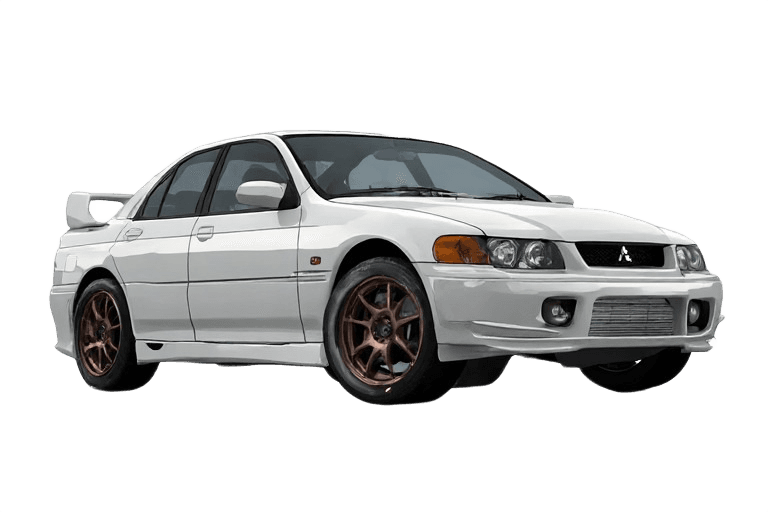
CD9AMitsubishi Lancer Evolution I
1992–1994 · 244 hp · AWD
The original Lancer Evolution took an ordinary compact sedan and stuffed in a serious turbocharged AWD rally weapon, kicking off a nameplate that would spend the next two decades trading blows with Subaru's WRX STI for World Rally Championship glory.
 CE9A
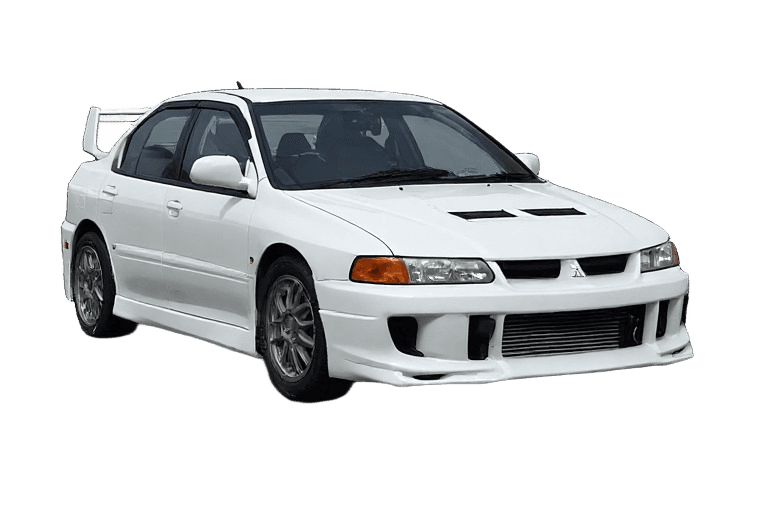
CE9AMitsubishi Lancer Evolution III
1995–1996 · 266–270 hp · AWD
The Evo III sharpened the formula with genuine aerodynamic addenda (a larger front bumper intake and rear wing) developed from Mitsubishi's rally program, and a revised 4G63T that pushed power notably higher than the original Evo I/II.
 CP9A
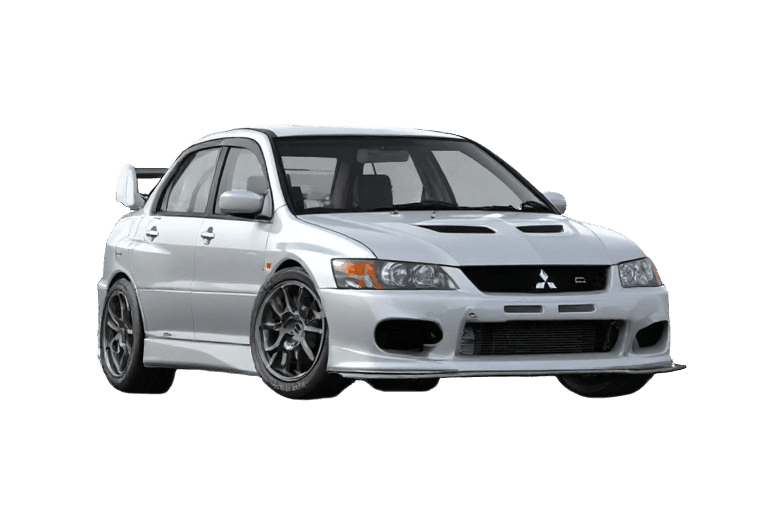
CP9AMitsubishi Lancer Evolution VI
1999–2001 · 276 hp · AWD
Refined specifically to help Tommi Mäkinen chase World Rally Championship titles, the Evo VI added improved cooling, a stronger drivetrain, and a limited Tommi Mäkinen Edition that remains one of the most desirable Evos ever built.