Mitsubishi · CE9A
Mitsubishi Lancer Evolution III
The Evo III sharpened the formula with genuine aerodynamic addenda (a larger front bumper intake and rear wing) developed from Mitsubishi's rally program, and a revised 4G63T that pushed power notably higher than the original Evo I/II.

Spec Sheet
- Generation / Chassis Code
- CE9A
- Years Produced
- 1995–1996
- Manufacturer
- Mitsubishi
- Country
- Japan
- Body Style
- 4-door sedan
- Engine
- 2.0L turbo inline-4 (4G63T)
- Horsepower
- 266–270 hp
- Torque
- 260 lb-ft
- Transmission
- 5-speed manual
- Drivetrain
- AWD
- Weight
- ~2,700 lbs
- 0–60 mph
- ~4.9 seconds
History
Continuing Mitsubishi's rapid homologation development cycle, the Evo III's aero improvements and engine revisions were directly informed by lessons learned in World Rally Championship competition, reflecting the intense pace of the early-90s Group A rally arms race.
Why It Became Famous
It represents the aggressive early evolution of the Evo formula, with functional rally-derived aero and rising power figures that set the template for the increasingly serious Evo generations that followed.
Strengths
- Increased power over Evo I/II from a revised 4G63T turbo setup
- Functional rally-derived aero improves high-speed stability
- Same tough, hugely tunable 4G63T engine platform
- Sharper, more aggressive styling than the earlier Evo generations
Weaknesses
- Never sold outside Japan, requiring import for most global buyers
- Rare compared to more famous later Evo generations
- Same aging turbo and vacuum system concerns as other 4G63T cars
- Basic interior reflecting its rally-homologation-focused mission
Common Problems
- 4G63T turbo and head gasket wear, especially on tuned examples
- AWD system wear if maintenance is neglected
- Rust in typical mid-90s Japanese sedan problem areas
- Scarce genuine parts given low original production numbers
Modification Potential
Excellent — shares the 4G63T's well-proven tuning path with the rest of the early Evo lineage, supporting big turbo and built-engine upgrades reliably.
Buying Guide
Verify genuine import documentation, confirm aero and body panels are original or correctly reproduced, and check 4G63T turbo and head gasket condition before buying.
Enthusiast Popularity Today
A respected but relatively niche pick among early Evo collectors, often overshadowed by the more globally famous Evo V, VI, and IX.
Fun Facts
- Its aerodynamic revisions were directly informed by Mitsubishi's active World Rally Championship program
- Power climbed notably over the Evo I/II thanks to a revised turbo and intercooler setup
- It remains one of the rarer Evo generations, having a shorter production run than its successors
More from Mitsubishi
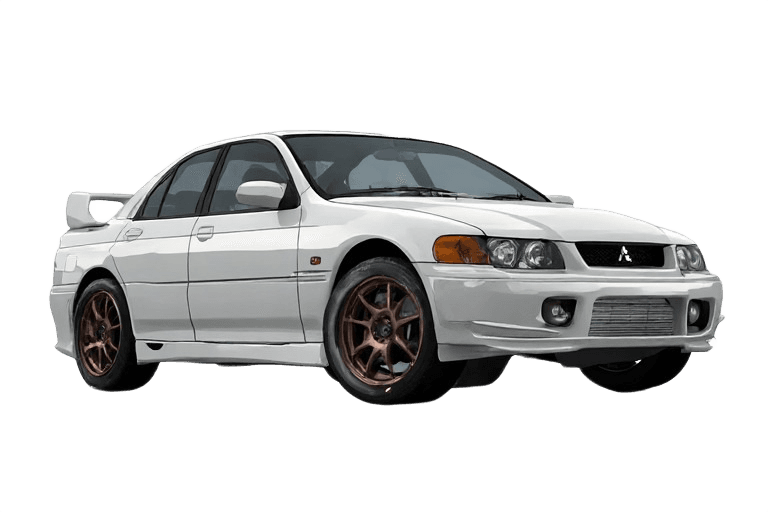 CD9A
CD9AMitsubishi Lancer Evolution I
1992–1994 · 244 hp · AWD
The original Lancer Evolution took an ordinary compact sedan and stuffed in a serious turbocharged AWD rally weapon, kicking off a nameplate that would spend the next two decades trading blows with Subaru's WRX STI for World Rally Championship glory.
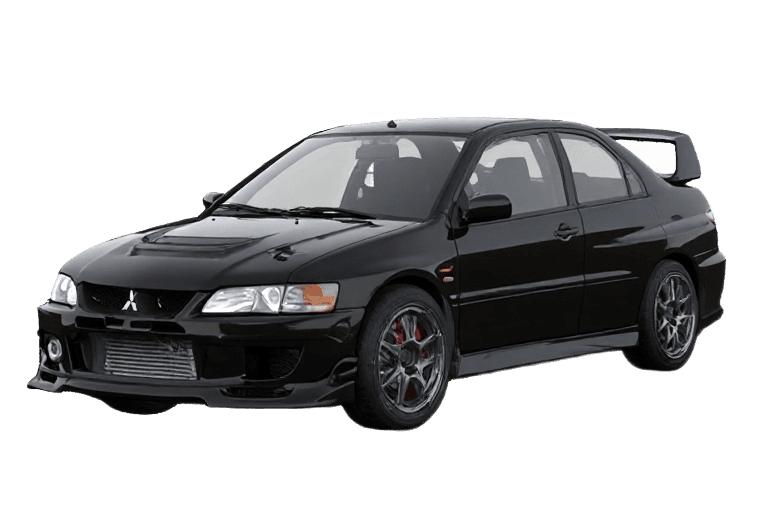 CP9A
CP9AMitsubishi Lancer Evolution V
1998 · 276 hp · AWD
Wider, more aggressive, and genuinely track-focused, the Evo V introduced a wider track and Mitsubishi's Active Yaw Control (AYC) rear differential, a genuine torque-vectoring system that dramatically sharpened the car's cornering ability.
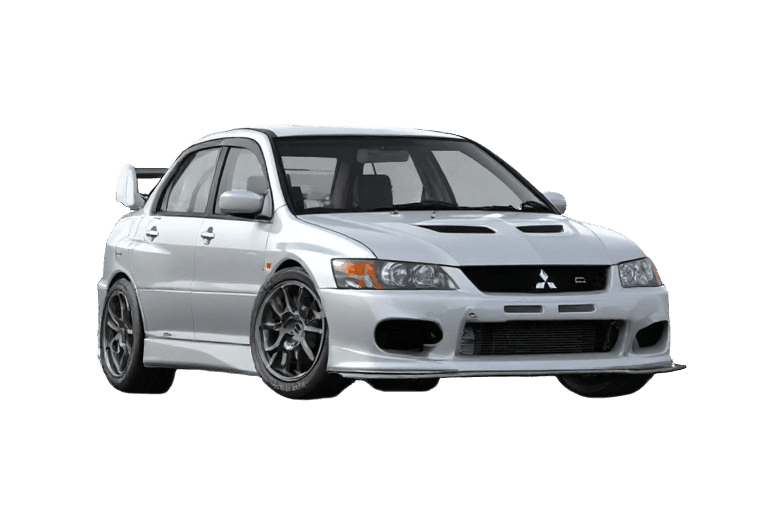 CP9A
CP9AMitsubishi Lancer Evolution VI
1999–2001 · 276 hp · AWD
Refined specifically to help Tommi Mäkinen chase World Rally Championship titles, the Evo VI added improved cooling, a stronger drivetrain, and a limited Tommi Mäkinen Edition that remains one of the most desirable Evos ever built.