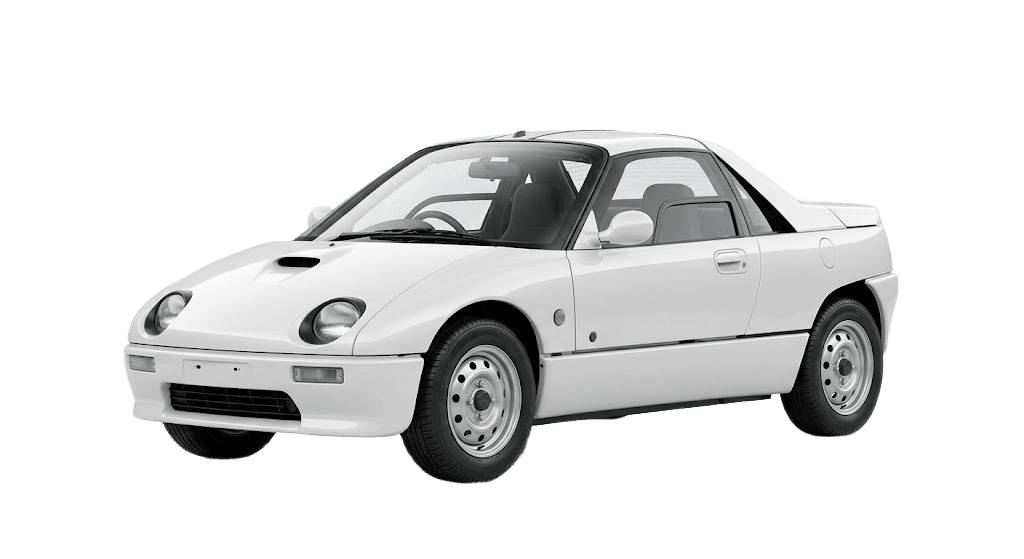
Suzuki · EA11R
Suzuki Cappuccino
A featherweight, front-mid-engine kei roadster with a removable targa roof, hardtop, and full convertible modes all in one car, the Cappuccino packed genuine sports-car engineering — including a front-mid-engine layout and near-perfect weight balance — into Japan's strict kei-car regulations.

Spec Sheet
- Generation / Chassis Code
- EA11R
- Years Produced
- 1991–1997
- Manufacturer
- Suzuki
- Country
- Japan
- Body Style
- 2-door roadster convertible (targa/T-top)
- Engine
- 0.66L turbo inline-3 (F6A)
- Horsepower
- 63 hp (JDM kei-car limit)
- Torque
- 68 lb-ft
- Transmission
- 5-speed manual
- Drivetrain
- RWD
- Weight
- ~1,590 lbs
- 0–60 mph
- ~8.9 seconds
History
Suzuki engineered the Cappuccino with aluminum body panels and a front-mid-engine RWD layout specifically to deliver genuine sports car dynamics within kei-car size and power limits, giving it a surprisingly serious engineering pedigree for such a small, affordable car.
Why It Became Famous
Its clever, versatile roof system (removable targa panels, folding hardtop, and full convertible configurations) combined with genuinely sporty rear-wheel-drive dynamics made it a cult favorite among kei-car and lightweight sports car enthusiasts worldwide.
Strengths
- Front-mid-engine RWD layout gives genuine sports-car handling balance in a tiny package
- Extremely versatile removable roof system offers targa, hardtop, and full convertible modes
- Turbocharged engine makes the most of kei-car power limits
- Aluminum body panels keep weight remarkably low
Weaknesses
- Very low absolute power limits real-world performance, especially at highway speeds
- Tiny size feels vulnerable in modern traffic conditions
- Never officially exported outside Japan, requiring import in most markets
- Removable roof panels need careful storage and sealing to avoid leaks
Common Problems
- Turbo wear and boost control issues on the small, high-strung F6A engine
- Roof panel seal wear leading to water leaks if not properly maintained
- Rust in the small unibody structure on poorly stored examples
- Timing belt service is critical given the small, high-revving engine
Modification Potential
Moderate within kei-car tuning culture — turbo and ECU tuning gains are popular, though power increases are constrained by both engine size and Japan's kei-car regulations if the owner wants to retain that classification.
Buying Guide
Since it's JDM-only, verify import documentation, inspect all roof panels and seals for wear or leaks, and check turbo and boost control health on a test drive.
Enthusiast Popularity Today
A beloved cult classic among kei-car and lightweight sports car enthusiasts, cherished for its clever engineering and genuine driving fun within tiny dimensions.
Fun Facts
- Its removable roof system offers several different configurations, from full hardtop to open targa to complete convertible
- It uses a front-mid-engine layout, with the engine mounted behind the front axle line for better weight balance, unusual for a car this small
- Aluminum body panels were used specifically to keep weight down within Japan's strict kei-car limits